🧠 ReCoSeg — Residual-Guided Cross-Modal Diffusion for Brain Tumor Segmentation
📌 Goal:
Improve brain tumor segmentation accuracy by synthesizing missing modalities using diffusion models and leveraging residual errors as attention cues for efficient, interpretable refinement.
🧠 Domain: Medical Imaging & Semi-Supervised Deep Learning
🎯 Task: Brain Tumor Segmentation (Whole Tumor)
📂 Dataset: BraTS 2020 — Multimodal MRI (355 subjects; FLAIR, T1, T2, T1ce)
Project Domain
Imaging
Task
Segmentation

The Goal:
Manual segmentation of brain tumors is time-consuming and dependent on expert annotations, while available labels may be sparse in real clinical settings. ReCoSeg addresses this by splitting the problem into two phases: cross-modal T1ce synthesis using diffusion and residual-guided segmentation to correct tumor-related discrepancies. The aim is to enhance accuracy, reduce labeling burden, and improve clinical interpretability.
1
The Challenge:
Methodology & Process
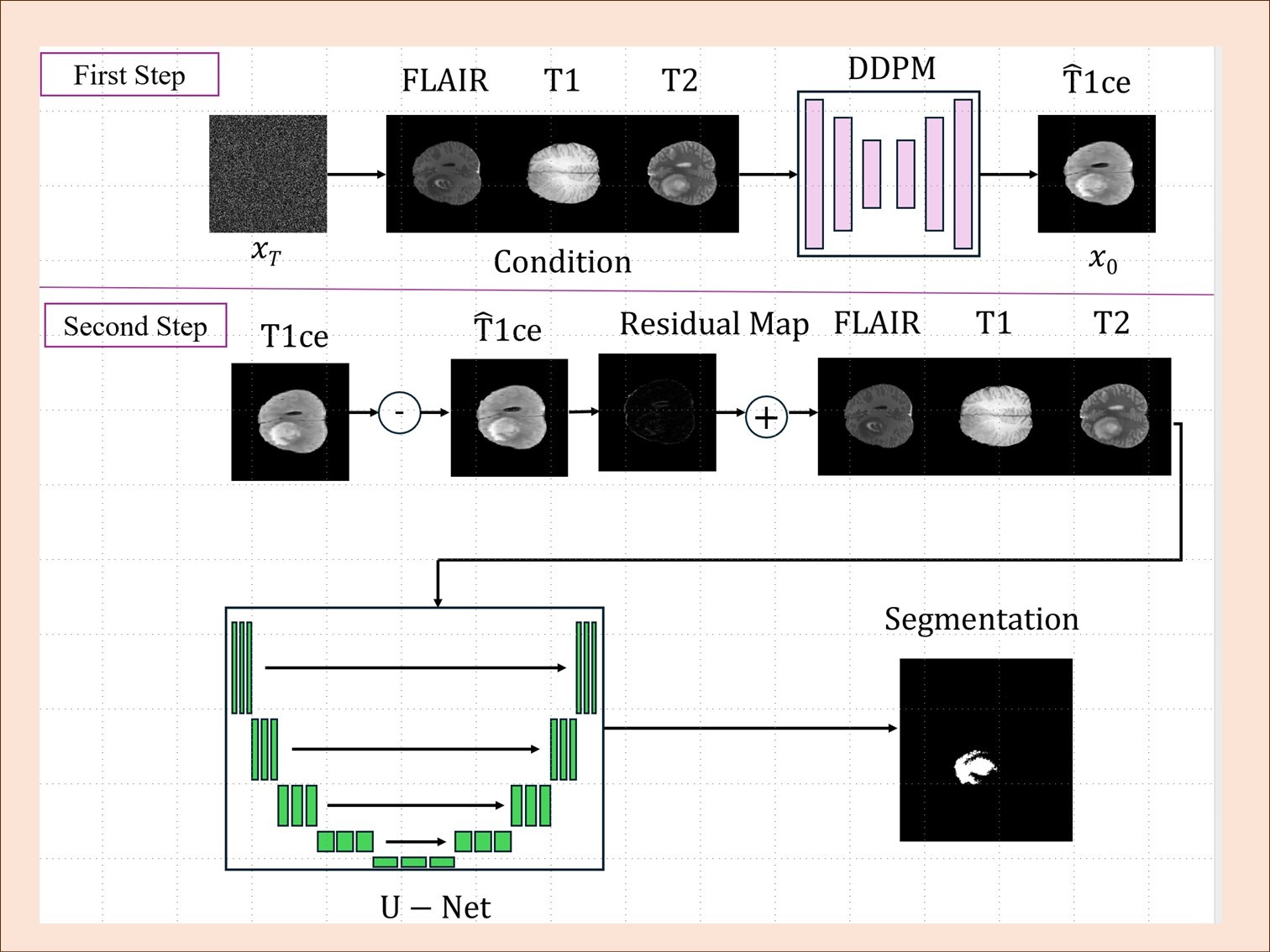
📌 Stage 1 — Cross-Modal Diffusion Synthesis
A DDPM generates the T1ce modality from FLAIR, T1, and T2 MRI, trained with BCE + Dice loss to improve structural alignment.
📌 Stage 2 — Residual-Guided Segmentation
The absolute difference between synthesized and real T1ce is computed as a residual map that highlights possible tumor regions.
Residuals + original modalities → lightweight U-Net for final segmentation.
📌 Training Setup
Input: Axial slices 120×120
Loss: BCE + Dice
Optimizer: Adam, LR=2e-4
Hardware: RTX 3090 GPU
Semi-supervised design for robustness with missing modalities
2
The Result
📊 Results & Findings
Model | Dice ↑ | IoU ↑ |
|---|---|---|
UNet2D | 0.784 | 0.736 |
UNet3D | 0.842 | 0.743 |
DDMM-Synth | 0.872 | 0.811 |
ReCoSeg (Proposed) | 0.917 | 0.853 |
✅ Key Insight:
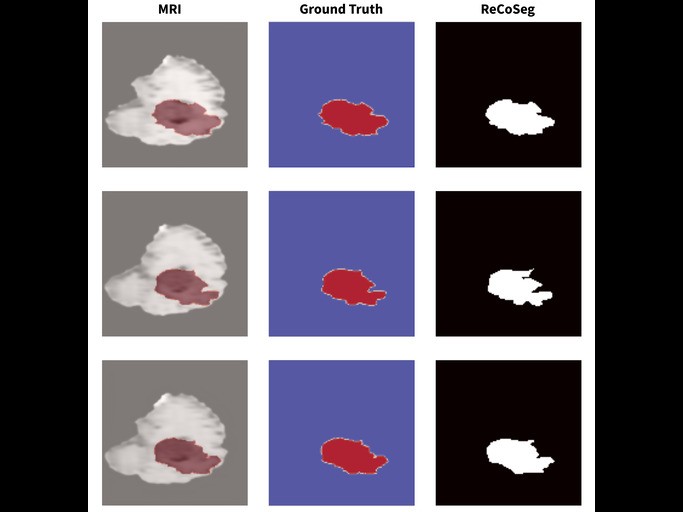
Residual maps explain and correct segmentation mistakes increasing boundary precision while keeping the model lightweight and efficient.
📊 Visuals Included:
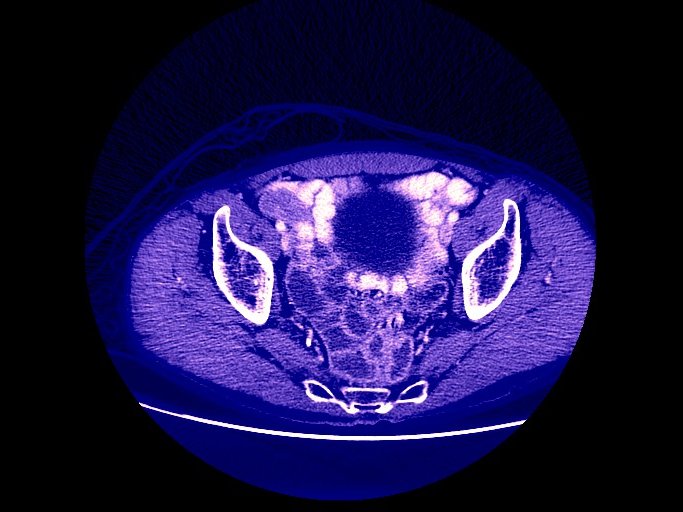
Real vs. Synthesized T1ce
Residual localization over tumor areas
Segmentation comparison vs. baselines
🏁 Conclusion
ReCoSeg provides an interpretable, semi-supervised, and computationally efficient segmentation pipeline that learns from cross-modal discrepancies.
Its strong performance with limited annotations and missing modalities supports real-world clinical adoption and motivates future extension to 3D diffusion and multi-class segmentation.
View Manuscript here:
Recoseg
3
Recent Designs